
A brand paragraph, and no brief.
Gemnye make one product, a contained elevated car seat for small and medium dogs. What they sent us was a statement about the company: comfort, safety, care, products that fit into modern life with pets. Warm, sincere, and not a website.
There was no page list, no sitemap, no reference site, no copy. There was also no live listing yet, so the site could not lean on marketplace reviews or sales history to do the persuading.
That left the actual question. A structured box that holds a dog on a back seat is not an obvious purchase. Buyers want to know whether it fits their dog, whether it is safe, and what it is not. Answer those and the sale follows. Decorate around them and it does not.
Constraints
- No CMS, and nobody to run one. An owner-operated brand with no technical staff. Anything that needed patching, logging into or paying a monthly fee for was the wrong answer.
- Nothing to point at. No listing, no reviews, no press. The site had to earn trust on its own.
- Safety claims, and the law around them. Pet restraints sit close to claims a brand is not allowed to make. Getting this wrong is not a style problem.
- Phones, and US traffic. Most visits arrive from social links on a phone.
- Six days. Start to live.
Decisions
Say what the product is not
The strongest page on the site tells you what the seat isn't. It is a containment and comfort seat, not a crash restraint. It has no independent certification and we do not imply one. Every measurement published is measured, and the two we could not confirm are listed as unconfirmed, in public, with the reason.
This was our call, not the brief. For a product where a wrong assumption has real consequences, refusing to overclaim is worth more than any amount of persuasion. It also keeps the brand clear of claims it cannot support.
Build a fit tool instead of a size chart
Buyers do not want a table of dimensions, they want to know whether their dog fits. So the site has a Fit Ruler: measure the dog, get an answer. If the numbers say no, it says no.
A tool that talks buyers out of a purchase sounds like a bad idea until you count the returns it prevents and the trust it buys.
A video header, and a journal
The seat has to be seen in a car, on a back seat, with a dog in it, to make sense. Static photography could not carry that, so the header is footage. The journal exists so the brand has somewhere to grow that isn't the product page.
Static, with no CMS at all
Content lives as MDX files and a single product record in the repository. There is no admin panel because there is nothing to log into, no plugin to patch, and no subscription. The site is Astro, compiled to static files and served from Cloudflare Workers. A push to main deploys it.
The contact form is the one dynamic part: an API route on the same Worker, with Turnstile filtering spam, KV enforcing rate limits, and Resend delivering the mail. No third-party form service, no tracking scripts in the browser.

What shipped
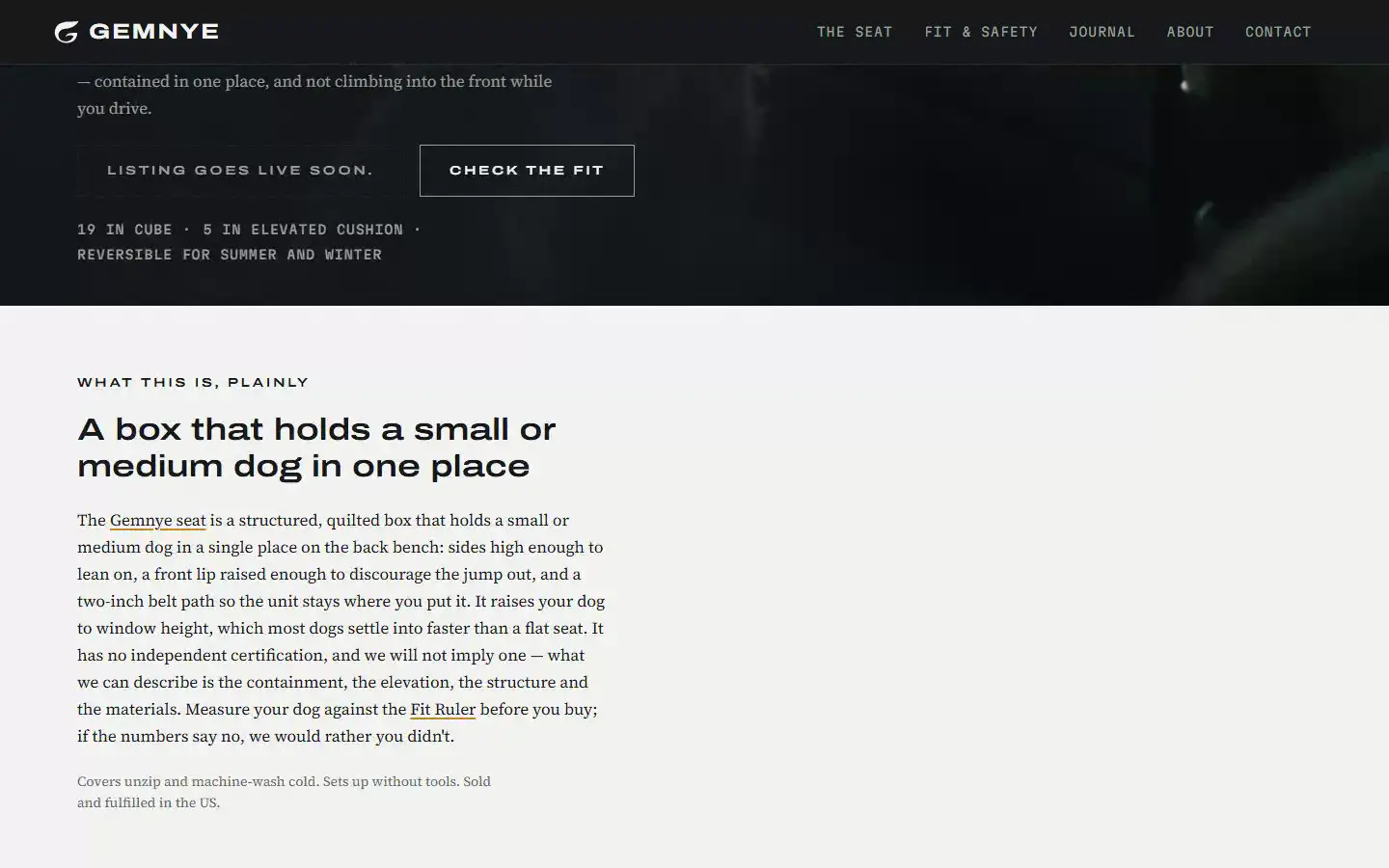
Live on day six.
Google PageSpeed on 12 September 2026 returned 100 for performance, accessibility, best practices and SEO on desktop, with first paint at 0.4 seconds and no layout shift at all. Mobile scores 95, with the same perfect accessibility, best practices and SEO. Total blocking time is zero on both.
Hosting runs on Cloudflare's free tier. There is no CMS to patch and no subscription attached to the site. The client owns every account it runs on.